Turning a Complex FDA Process into a Guided Conversation
NoQuestionsAI helps food-industry teams build structured GRAS dossiers with an AI-guided workflow and regulatory sources close at hand.
Focus
Product Strategy & UX
Timeline
2026
Industry
Food Regulatory Intelligence
Product
AI-Powered GRAS Dossier Builder
The Challenge
Preparing an FDA GRAS notification means coordinating technical ingredient data, manufacturing details, specifications, intended-use assumptions, dietary exposure, safety evidence, regulatory history, and supporting references. The blank page is only the beginning; the larger design problem is helping teams know what to answer next and where each answer belongs.
How might we turn a fragmented, expert-led process into a focused workflow without hiding the sources or the need for professional review?
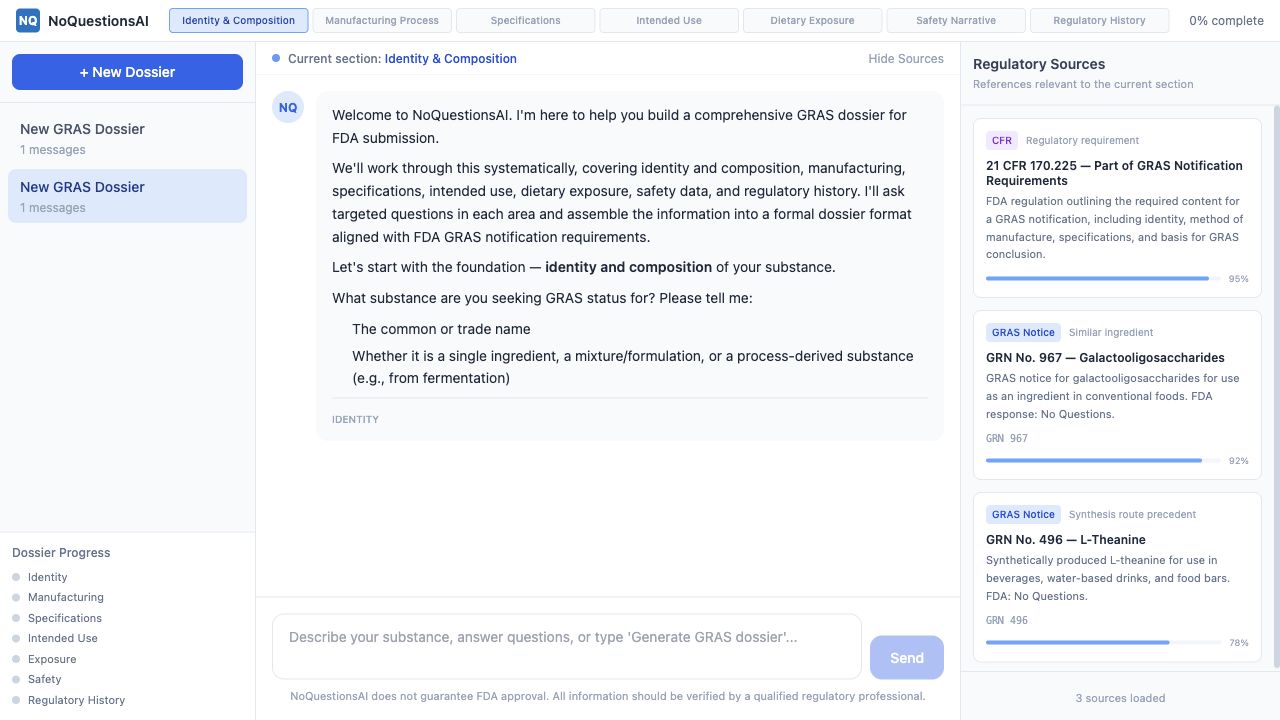
A Guided Interview, Not an Empty Prompt
The interface breaks the dossier into seven visible sections and asks targeted questions in sequence. Each answer becomes structured content while the progress model shows what is complete and what still needs attention.
- Section-aware conversation: Questions stay anchored to the current part of the dossier.
- Live progress: Users can see completion across identity, manufacturing, specifications, intended use, exposure, safety, and regulatory history.
- Editable output: Generated language remains a working draft for review and refinement.
User Feedback Changed the Product
The MVP began with an AI-generated rendition of the product. It was fast and functional, but it also inherited the usual first-pass tendency to show too much interface at once. User feedback helped separate what was technically possible from what people actually needed while preparing a dossier.
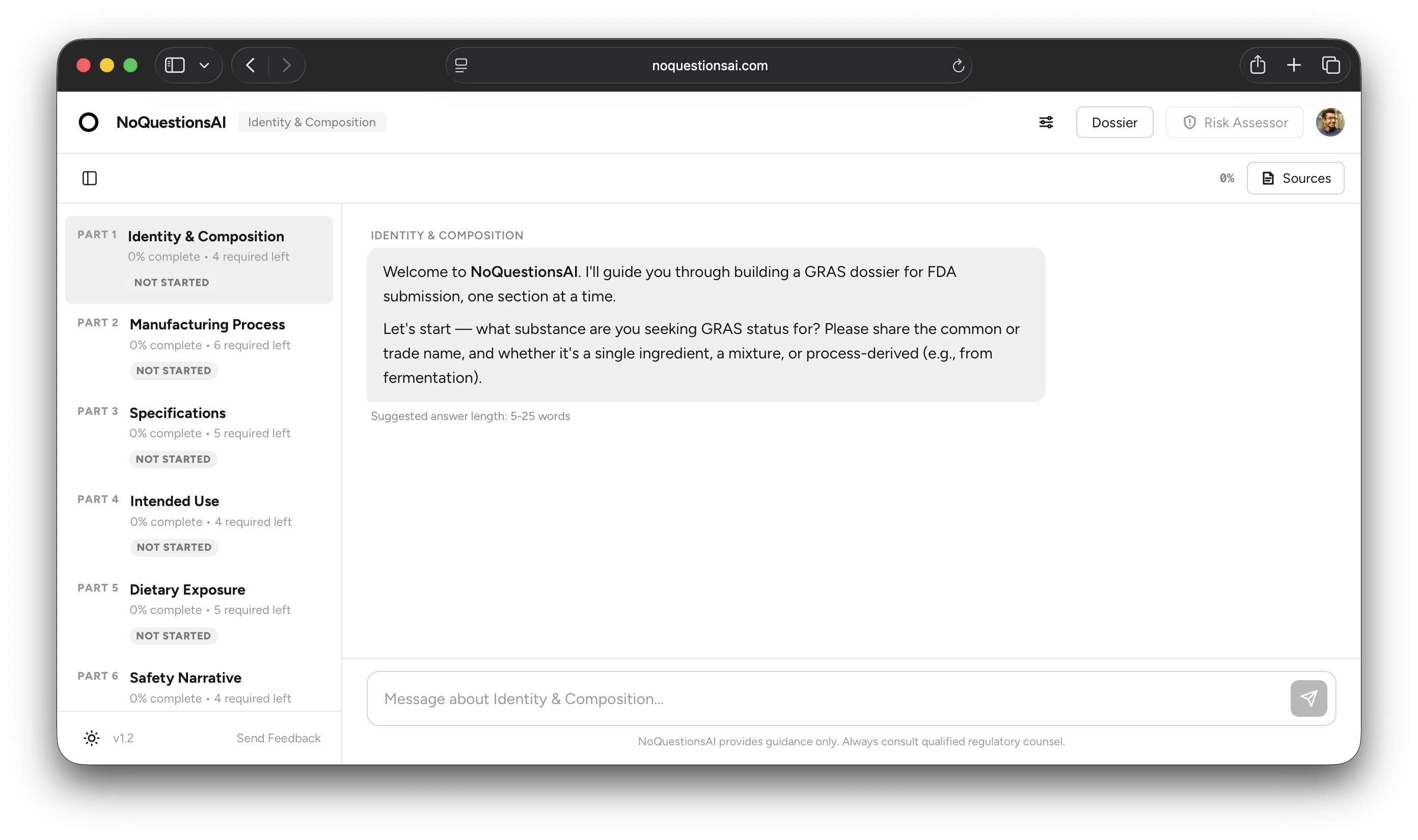
- Strip back the chrome: Secondary controls moved out of the primary workflow so the current question and dossier section could lead.
- Make progress legible: Section status and remaining requirements became a quiet navigation system instead of another dashboard competing for attention.
- Keep AI in service of the task: The interface stopped presenting AI as the product and focused instead on completing a defensible regulatory document.
Feedback also made it clear that the real workflow was larger than one guided dossier: teams needed to manage multiple projects, understand progress at a glance, and bring additional contributors into a shared organizational workspace.
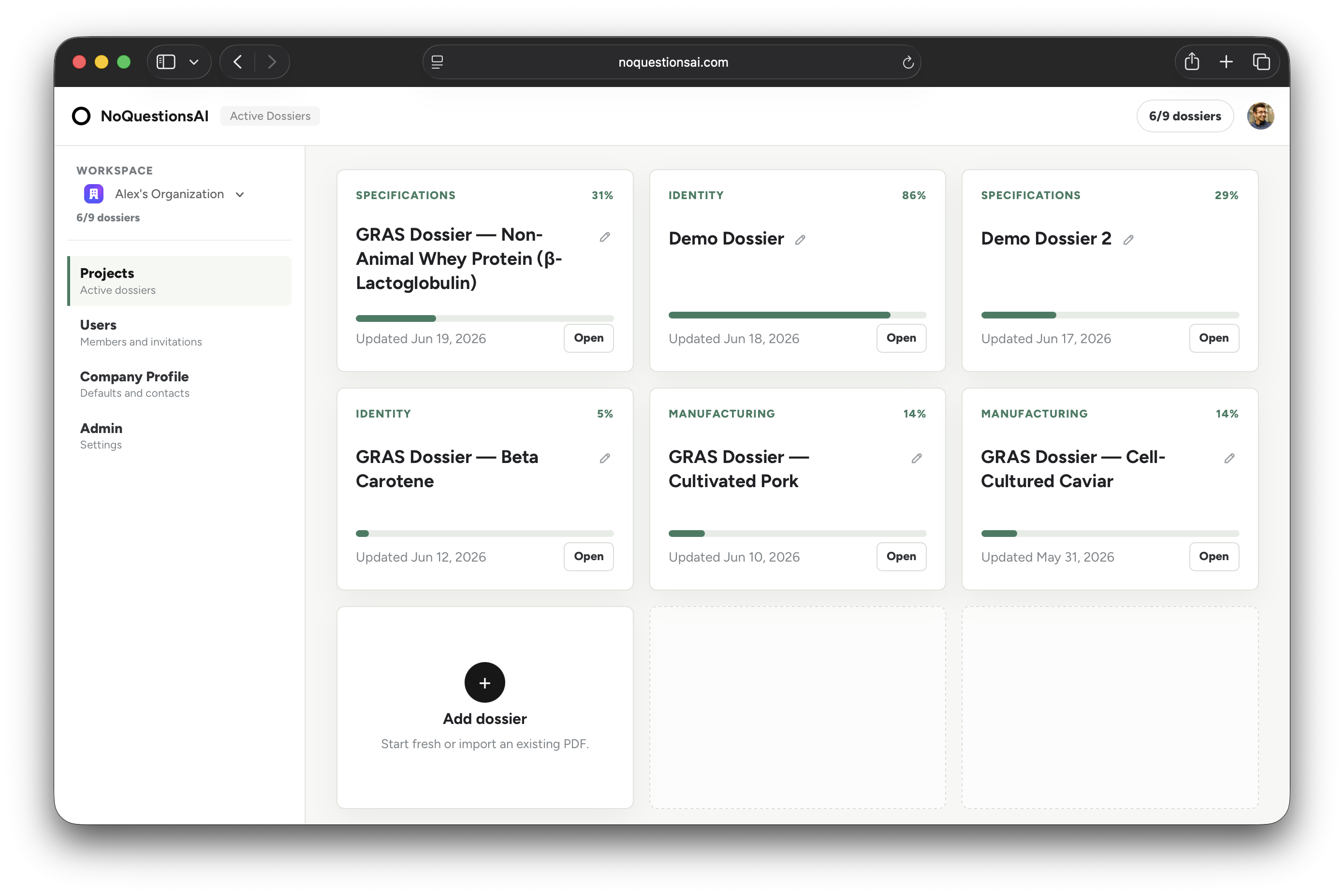
- From conversation to workspace: The product expanded beyond a single AI interaction into a persistent home for regulatory projects.
- Portfolio-level visibility: Dossier cards surface section status, completion, and recent activity without opening every project.
- Built for organizations: Navigation now accounts for users, invitations, company defaults, contacts, and administration.
The feedback did not simply refine the interface; it changed the product’s information architecture.
Early Interest Shaped the Message
Interest in the concept arrived quickly. This real-time snapshot captured 67 active users in 30 minutes—including 66 in the most recent five minutes—with activity spanning the United States, Europe, and Japan.
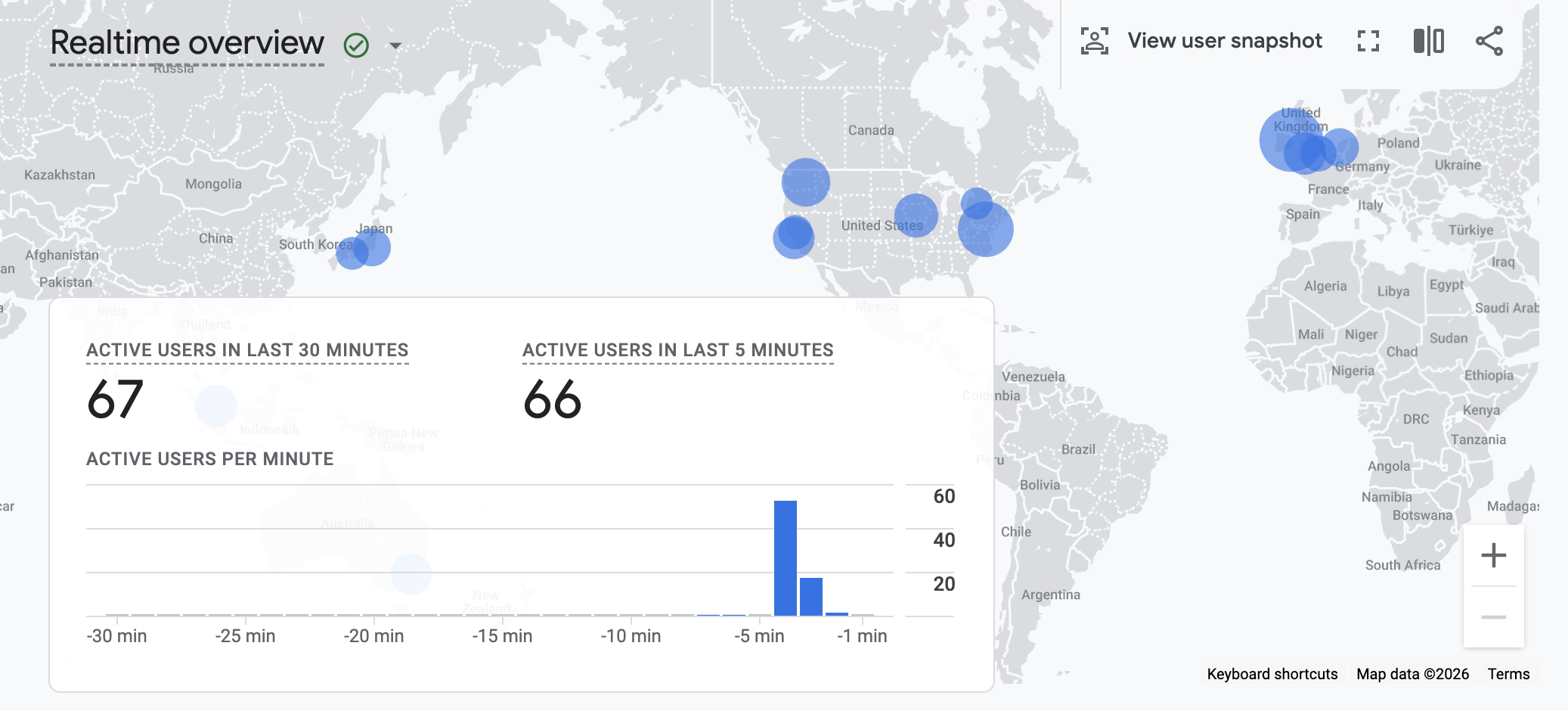
The traffic was more than a launch metric. Audience and behavior data became an input to the marketing design: it helped determine what the landing page should explain first, which product benefits deserved emphasis, and where visitors needed clearer language before taking action.
- Lead with the outcome: Messaging moved toward the practical value of building FDA GRAS dossiers faster, rather than generic claims about AI.
- Clarify the workflow: The landing page made the guided interview, live dossier, and regulatory context tangible before asking visitors to commit.
- Use evidence to prioritize: Interest patterns informed the hierarchy of the hero, supporting proof points, and calls to action.
Document Generation Is a Team Process
NoQuestionsAI turns the guided interview into a structured, editable dossier draft. But a GRAS submission is rarely authored by one person: regulatory specialists, food scientists, manufacturing teams, safety experts, and legal reviewers may all hold different parts of the evidence needed to complete the document.
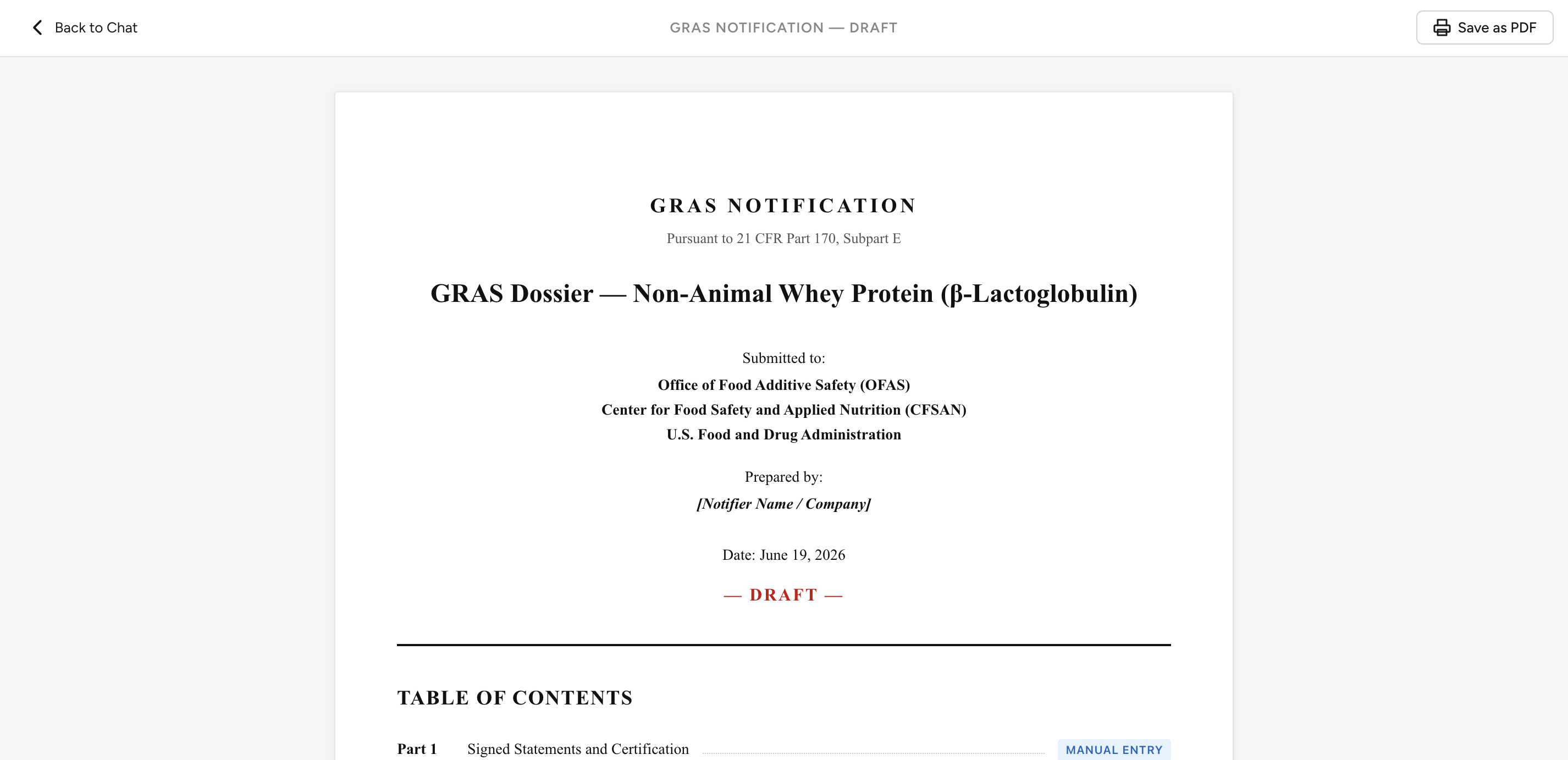
- Shared structure: Contributors work within the same seven dossier sections instead of assembling disconnected files and email threads.
- Specialist input: Each stakeholder can contribute the technical details and supporting evidence relevant to their expertise.
- Reviewable generation: The system produces a working document that teams can edit, verify, and refine before final regulatory review.
The AI helps assemble the document; accountable experts shape and approve it.
The Product Principle
High-stakes AI needs a different interaction model from a general-purpose chatbot. NoQuestionsAI combines progressive disclosure, formal document structure, editable content, and visible source retrieval while clearly positioning the result as a draft for qualified regulatory, scientific, and legal review.